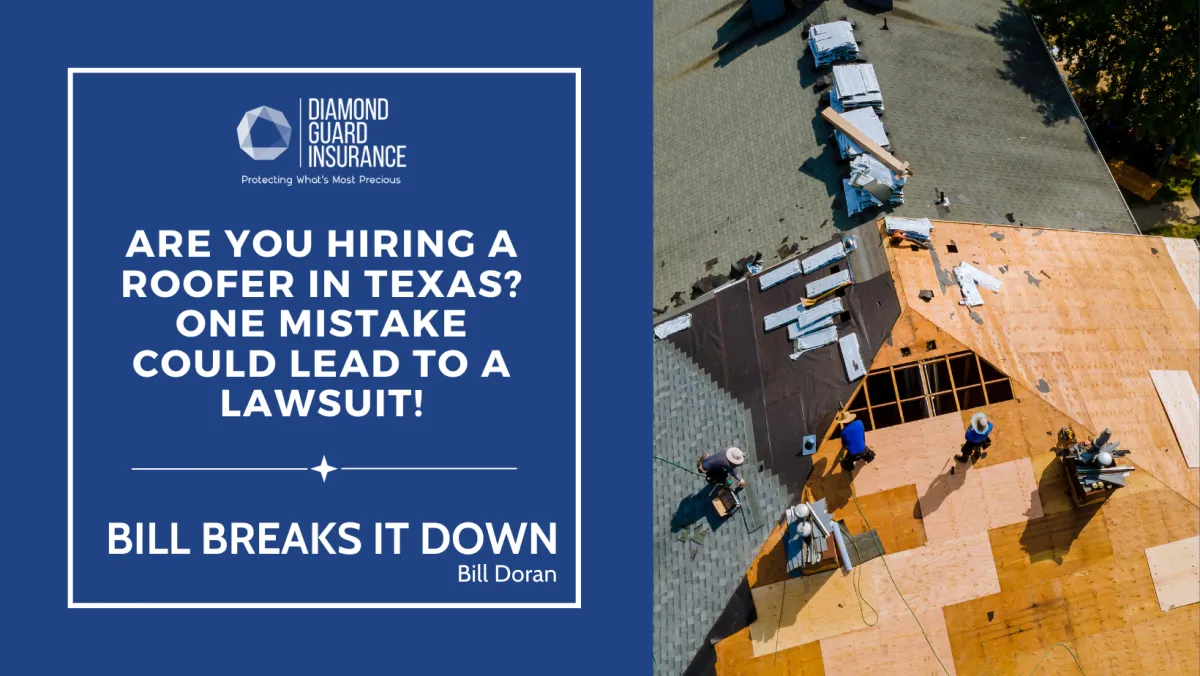
Are You Hiring a Roofer in Texas? Read This First!
Spring in Texas marks the beginning of storm season—and with it, a surge in roof repairs and replacements. Due to intense heat, high winds, and frequent hailstorms, roofs in Texas tend to wear out faster than expected. While many roofing materials are marketed with 30-year warranties, the reality is that most roofs in this region last closer to 15–20 years, and sometimes significantly less.
With so much roofing activity during this time of year, homeowners often focus on cost, timing, and contractor availability. However, one critical factor is frequently overlooked: whether the contractor carries the proper insurance.
Failing to verify this can lead to serious financial consequences.
A Real-World Scenario
A homeowner hired a roofing contractor after seeing them working in the neighborhood. The company appeared legitimate—they had signage, a crew, and active jobs nearby. Based on these observations, the homeowner assumed the contractor was properly insured.
During the project, one of the workers fell from the roof and sustained significant injuries, requiring emergency medical care.
At that point, the situation escalated quickly.
It was discovered that the contractor did not carry the appropriate insurance coverage. As a result, liability shifted to the homeowner, exposing them to potential legal and financial responsibility for the injury.
Why Contractor Insurance Matters
There are two key types of insurance coverage that roofing contractors—and most contractors—should carry:
General Liability Insurance
This coverage protects against property damage or liability arising from the contractor’s work. For example, if the contractor causes damage to the home or surrounding property, general liability insurance may respond.
Workers’ Compensation Insurance
This coverage is critical. It protects workers who are injured on the job by covering medical expenses and lost wages.
If a contractor does not carry workers’ compensation insurance and a worker is injured on your property, the homeowner may be held responsible for those injuries.
The Risk of Assumptions
Many homeowners assume that a contractor operating a visible, active business is properly insured. However, appearance alone does not guarantee adequate coverage.
Assumptions in this area can create significant exposure.
Even if a contractor offers a lower price, the financial risk of hiring an uninsured or underinsured contractor can far outweigh any short-term savings.
How to Protect Yourself
Before any work begins, homeowners should take a simple but important step:
Request a Certificate of Insurance
Do not rely on verbal confirmation. Ask the contractor to provide a certificate of insurance that clearly shows:
●Active general liability coverage
●Active workers’ compensation coverage
Reputable contractors are accustomed to this request and should be able to provide documentation quickly.
While the conversation may feel uncomfortable initially, it is a standard part of due diligence and helps ensure that all parties are properly protected.
Key Takeaway
Roof work is common during storm season in Texas, but it carries risks that homeowners may not fully consider. Verifying a contractor’s insurance coverage before work begins is one of the most important steps in protecting yourself from unexpected liability.
Taking a few moments to confirm coverage can prevent costly legal and financial consequences later.
FAQs
1. What happens if a roofer gets injured on my property?
If the contractor does not carry workers’ compensation insurance, the homeowner may be held responsible for the worker’s injuries, including medical costs and potential legal claims.
2. What insurance should a roofing contractor have?
A roofing contractor should carry both general liability insurance and workers’ compensation insurance to protect against property damage and worker injuries.
3. Is it enough to ask a contractor if they are insured?
No. Verbal confirmation is not sufficient. Homeowners should request a certificate of insurance to verify active coverage.
4. Why is workers’ compensation insurance so important?
Workers’ compensation covers injuries sustained by workers on the job. Without it, liability may shift to the homeowner if an accident occurs on their property.
5. Should I choose a contractor based on price alone?
No. While cost is important, hiring a contractor without proper insurance can lead to significant financial risk that outweighs any initial savings.