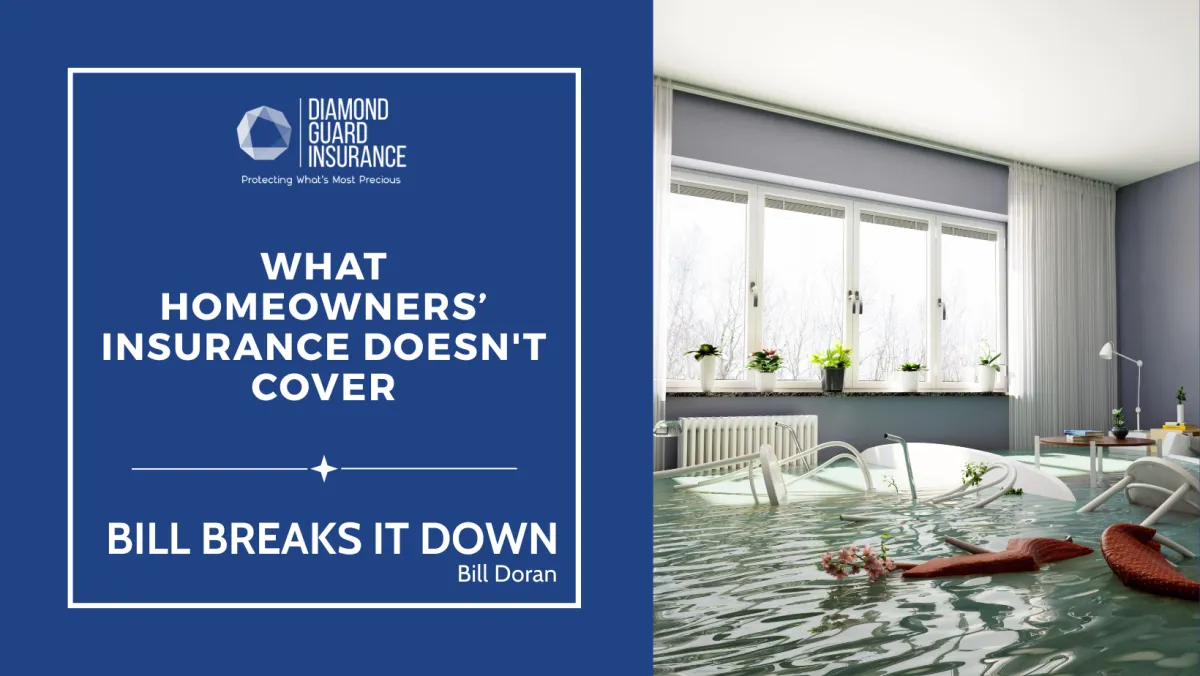
What Homeowners Insurance Doesn't Cover
When purchasing homeowners' insurance, many people assume their policy covers every type of damage their home could experience. While homeowners' insurance provides valuable financial protection, every policy has limitations and exclusions.
Understanding what your home insurance policy does not cover is just as important as knowing what it does. Knowing these common coverage gaps can help you avoid unexpected expenses and make informed decisions about protecting your home.
1. Flood Damage
One of the biggest misconceptions about homeowners' insurance is that it covers flood damage. In most cases, it does not.
Flooding caused by heavy rain, overflowing rivers, storm surge, or rapidly accumulating surface water is typically excluded from a standard homeowners' insurance policy. If you live in an area where flooding is possible, purchasing a separate flood insurance policy may be the best way to protect your home and belongings.
2. Sewer and Drain Backups
Water damage from a sewer or drain backup is another common exclusion.
If water backs up through your drains, toilets, or sewer lines, the damage may not be covered under your standard homeowners' insurance policy. Many insurance companies offer optional endorsements or riders that provide protection for these types of losses.
If your home has a basement or older plumbing system, it's worth discussing this coverage with your insurance professional.
3. Wear and Tear or Lack of Maintenance
Homeowners insurance is designed to cover sudden and accidental damage, not normal aging or maintenance issues.
Examples of damage that are generally not covered include:
Aging or worn roofs
Old or deteriorating plumbing
HVAC systems that fail due to age
Damage caused by deferred maintenance
Routine maintenance is an important part of homeownership and helps reduce the risk of larger problems that insurance may not cover.
4. Certain Foundation and Earth Movement Issues
Damage caused by earth movement is often excluded from standard homeowners insurance policies.
This may include:
Foundation settling
Shifting soil
Earth movement
Gradual foundation damage
Coverage depends on the cause of the damage and the specific language in your insurance policy. If you have concerns about foundation issues, it's important to review your policy with your insurance agent.
5. Home-Based Business Risks
Working from home has become more common than ever, but many homeowners don't realize that a standard homeowners insurance policy offers only limited protection for business-related property and liability.
If you operate a business from your home, you may need additional coverage to protect:
Business equipment
Inventory
Client property
Business liability
The type of business you operate will determine what additional insurance may be appropriate.
Why Understanding Your Coverage Matters
The best time to learn about gaps in your homeowners' insurance coverage is before you experience a loss.
Reviewing your policy regularly helps ensure you understand what is covered, what is excluded, and whether optional coverages may be appropriate for your situation. The goal isn't to create concern but to help you make informed decisions and avoid costly surprises.
Protect Your Home with Confidence
Your home is one of your largest investments, and homeowners' insurance plays a vital role in protecting it. However, no insurance policy covers every possible event.
Taking time to review your coverage, ask questions, and discuss your needs with a trusted insurance professional can help ensure your policy provides the protection that's right for you and your family.
Understanding your homeowners' insurance today can provide greater confidence and peace of mind tomorrow.