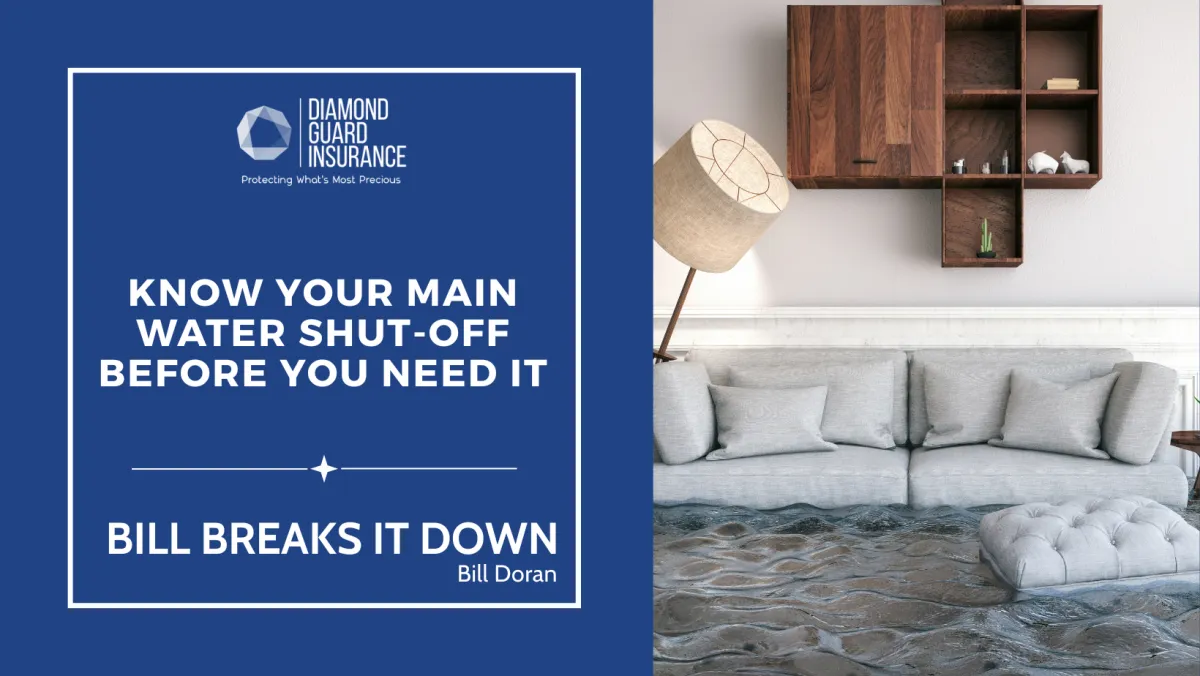
Why Every Homeowner Should Test Their Main Water Shut-Off Valve
When it comes to protecting your home, most homeowners know they should locate their main water shut-off valve. But there's one important step many people overlook:
Can you actually turn it off?
It may seem like a small detail until an emergency happens. If a pipe bursts or a water line suddenly fails, every second counts. A valve that's stuck, blocked, or requires a special tool could mean the difference between a quick cleanup and thousands of dollars in water damage.
A Real-Life Lesson
Recently, Diamond Guard Insurance's own Eric Wilson experienced this firsthand while working on a broken outdoor faucet at his new home.
Fortunately, the leak only occurred when the faucet was turned on, giving him enough time to schedule a plumber instead of dealing with a major emergency.
However, when it came time to shut off the home's main water supply, they ran into an unexpected problem.
Although they knew exactly where the shut-off valve was located, they couldn't turn it.
A protective casing installed by the home builder had been placed so close to the valve that there wasn't enough room to rotate the handle. The plumber actually had to dig away part of the casing just to gain access to the shut-off valve.
Imagine If It Had Been a Burst Pipe
In this situation, the leak was manageable.
But imagine if a pipe had burst inside the home.
Those extra minutes spent digging out the valve could have allowed hundreds of gallons of water to flow through the house, causing extensive damage to drywall, flooring, furniture, electrical systems, and personal belongings.
Water damage can escalate incredibly fast, making immediate action critical.
Your Home Could Have Similar Issues
This isn't just a concern for new construction.
Older homes can develop their own problems over time, including:
Rusted or seized shut-off valves
Corroded plumbing components
Valves hidden behind landscaping or storage
Missing or misplaced shut-off tools
Obstructed access due to renovations or additions
The best time to discover these issues is during a routine inspection, not during a plumbing emergency.
Three Simple Things Every Homeowner Should Do
1. Locate Your Main Water Shut-Off Valve
If you're unsure where it's located, take a few minutes to find it today. It's commonly found near the water meter, where the main water line enters your home, or outside near the property's perimeter.
2. Test the Valve
Carefully turn the valve to make sure it operates smoothly and isn't stuck or obstructed.
If it feels difficult to move, don't force it. Contact a licensed plumber to inspect or replace it before an emergency occurs.
3. Make Sure You Have the Right Tool
Not every shut-off valve can be operated by hand.
Some require a specialized shut-off key or wrench. If yours does, keep that tool in an easily accessible location so it's ready when you need it most.
A Five-Minute Check Could Save Thousands
Homeownership comes with plenty of maintenance tasks, but checking your main water shut-off valve is one of the simplest and most valuable things you can do.
It's quick.
It's easy.
And it could prevent extensive water damage and costly repairs.
Protect Your Home Before an Emergency Happens
At Diamond Guard Insurance, we believe protecting your home goes beyond having the right insurance policy. It also means taking simple preventative steps that can minimize damage when the unexpected happens.
Take a few minutes today to locate and test your main water shut-off valve. Hopefully you'll never need it, but if you do, you'll be glad you took the time.