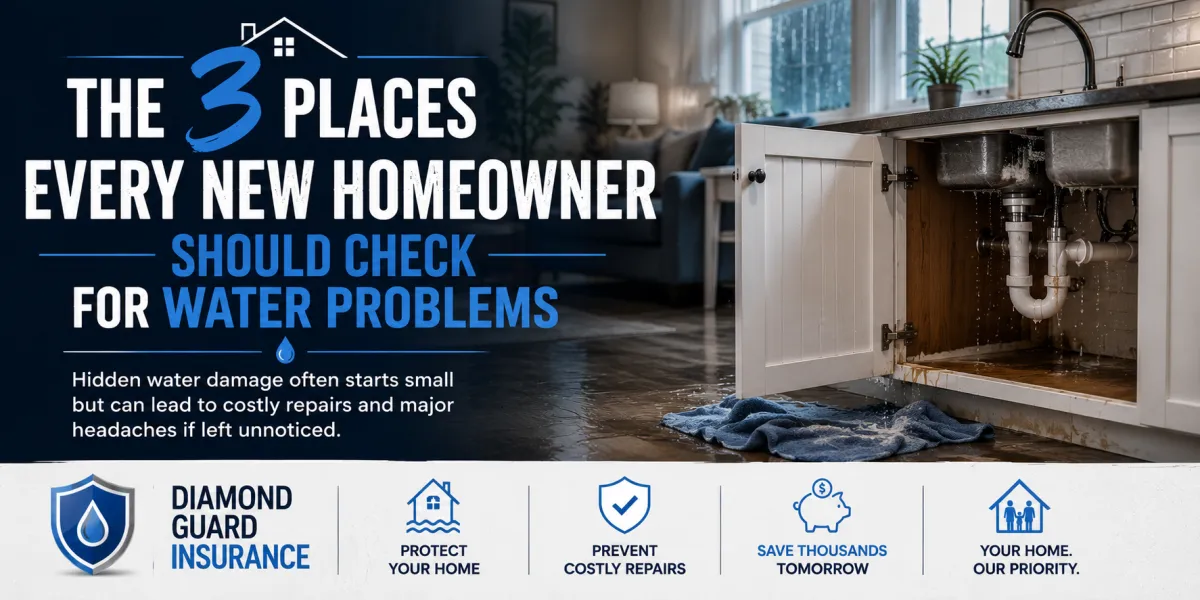
The 3 Places Every New Homeowner Should Check for Water
Buying your first home is an exciting milestone, but homeownership also comes with new responsibilities. One of the biggest threats to your home isn't always severe weather or major plumbing failures. In many cases, it's a slow leak that goes unnoticed for weeks or even months.
Water damage is one of the most common and costly issues homeowners face. Fortunately, many water problems begin small and can be caught early with a simple routine inspection.
If you've recently purchased a home, spending just a few minutes every couple of months checking these three areas can help protect your investment and prevent expensive repairs.
Why Water Damage Is So Expensive
A tiny drip may not seem like a big deal, but water has a way of causing damage long before you can see it.
Hidden leaks can lead to:
Mold and mildew growth
Damaged drywall
Warped cabinets and flooring
Rotting wood
Structural damage
Expensive repair bills
The earlier a leak is discovered, the easier and less expensive it usually is to fix.
That's why preventative home maintenance is one of the smartest habits every homeowner can develop.
1. Check Under Every Sink
Kitchen and bathroom sinks are among the most common places for hidden plumbing leaks to develop. Because the plumbing is tucked away inside cabinets, many homeowners rarely look underneath until there's already a problem.
Take a moment to open each cabinet and inspect the plumbing carefully.
Look for:
Dripping pipes
Water stains
Mold or mildew
Warped cabinet flooring
Musty odors
Even a slow drip can cause significant damage over time if it's left unnoticed.
A quick visual inspection every few months can help you catch problems before they become expensive repairs.
2. Inspect Around Every Toilet
Toilet leaks often develop gradually, making them easy to overlook.
Because the water isn't always obvious, many homeowners don't realize there's a problem until the flooring begins to soften or discolor.
Walk around each toilet in your home and check for:
Soft flooring
Discoloration
Water stains
Loose or shifting toilets
A leaking toilet seal can slowly damage the subfloor beneath your bathroom, leading to repairs that are much more costly than replacing a simple wax ring.
Regular inspections can help identify problems before major damage occurs.
3. Check Around Your Water Heater
Your water heater stores dozens of gallons of water, making it one of the most important appliances in your home to monitor.
A small leak today can quickly become a significant water loss event tomorrow.
During your inspection, look for:
Rust or corrosion
Water pooling near the unit
Moisture around fittings or connections
Signs of leakage from the pressure relief valve
If you notice any of these warning signs, it's a good idea to have the water heater inspected before a minor issue turns into a major repair.
Make Water Checks Part of Your Home Maintenance Routine
Many homeowners don't discover water damage until it's already visible. Unfortunately, by that point the damage may have spread behind walls, beneath flooring, or into cabinetry.
Adding these three simple inspections to your regular home maintenance routine takes only a few minutes and could help you avoid thousands of dollars in repairs.
Think of it as preventative maintenance for one of your biggest investments.
Small Habits Can Prevent Big Repairs
Homeownership isn't just about fixing problems when they happen. It's about preventing them whenever possible.
By routinely checking under sinks, around toilets, and near your water heater, you'll reduce the risk of hidden water damage while protecting your home's value.
The best repairs are the ones you never have to make because you caught the problem early.
Protect Your Home with Confidence
Regular maintenance is one of the easiest ways to protect your home, but it's just as important to make sure your homeowners insurance is keeping up with your needs. As your home changes, your coverage should too.
If you have questions about your homeowners insurance or would like a complimentary policy review, the team at Diamond Guard Insurance is here to help. We'll answer your questions, explain your coverage, and help you protect one of your most valuable investments.
Visit DiamondGuardInsurance.com to learn more about homeowners insurance, discover additional home maintenance tips, and request your personalized insurance review today.